Prana & BreathworkA Visual Guide
What the evidence says about slow breathing and breathwork, with prana explained as it is described in yogic tradition and belief.
Feeling unwell or worried? Call NHS 24 on 111, or 999 in an emergency. Samaritans: 116 123, free, any time.
Stop if you feel dizzy. Not suitable for children, in pregnancy or with epilepsy without medical advice.
38 pages A4 · phone edition 57 pages
On sale soon £3.99 · coming soon
Read a previewRead a preview
Read the first four pages right here (of 38). Swipe to turn, tap a page to see it bigger.
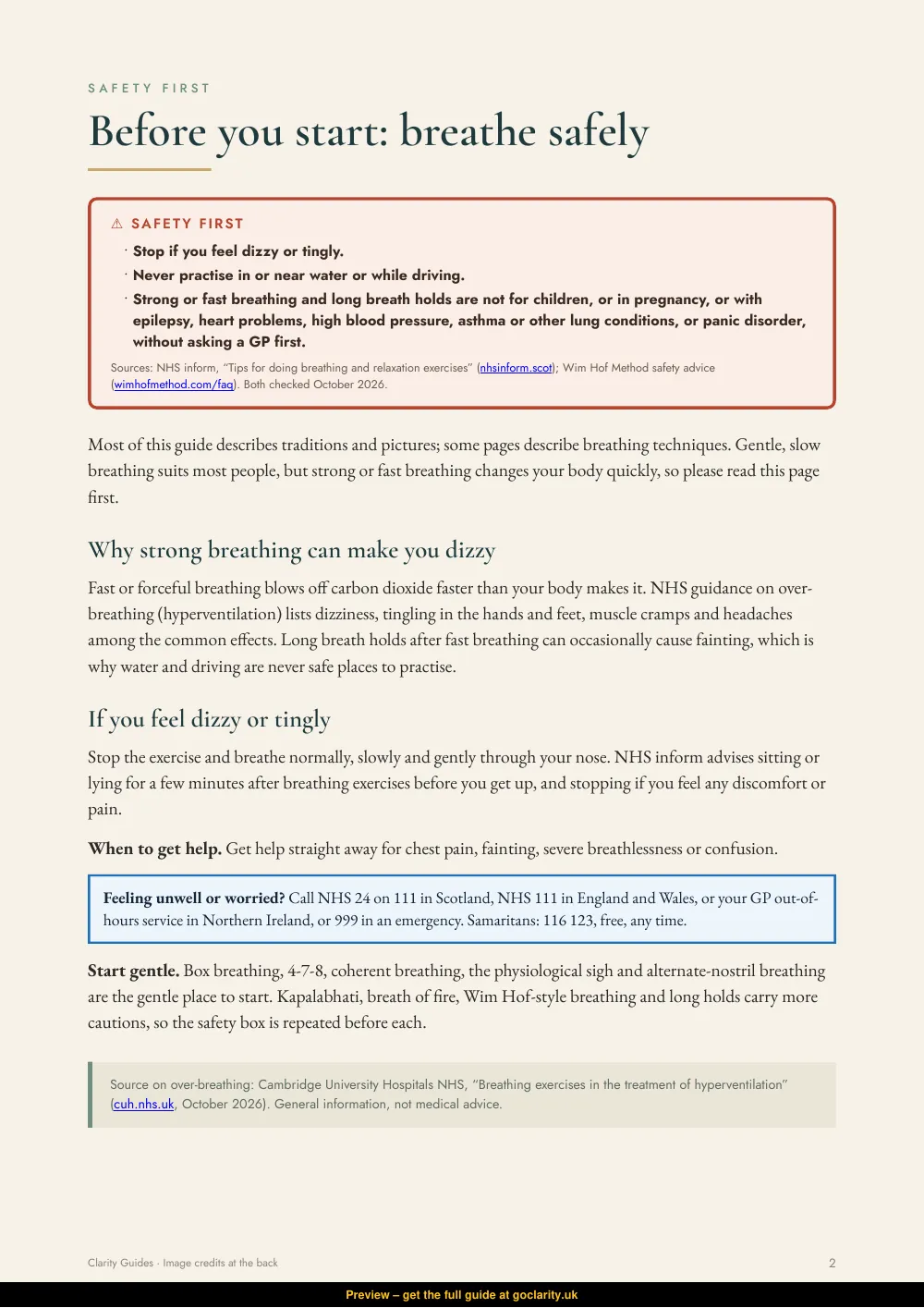
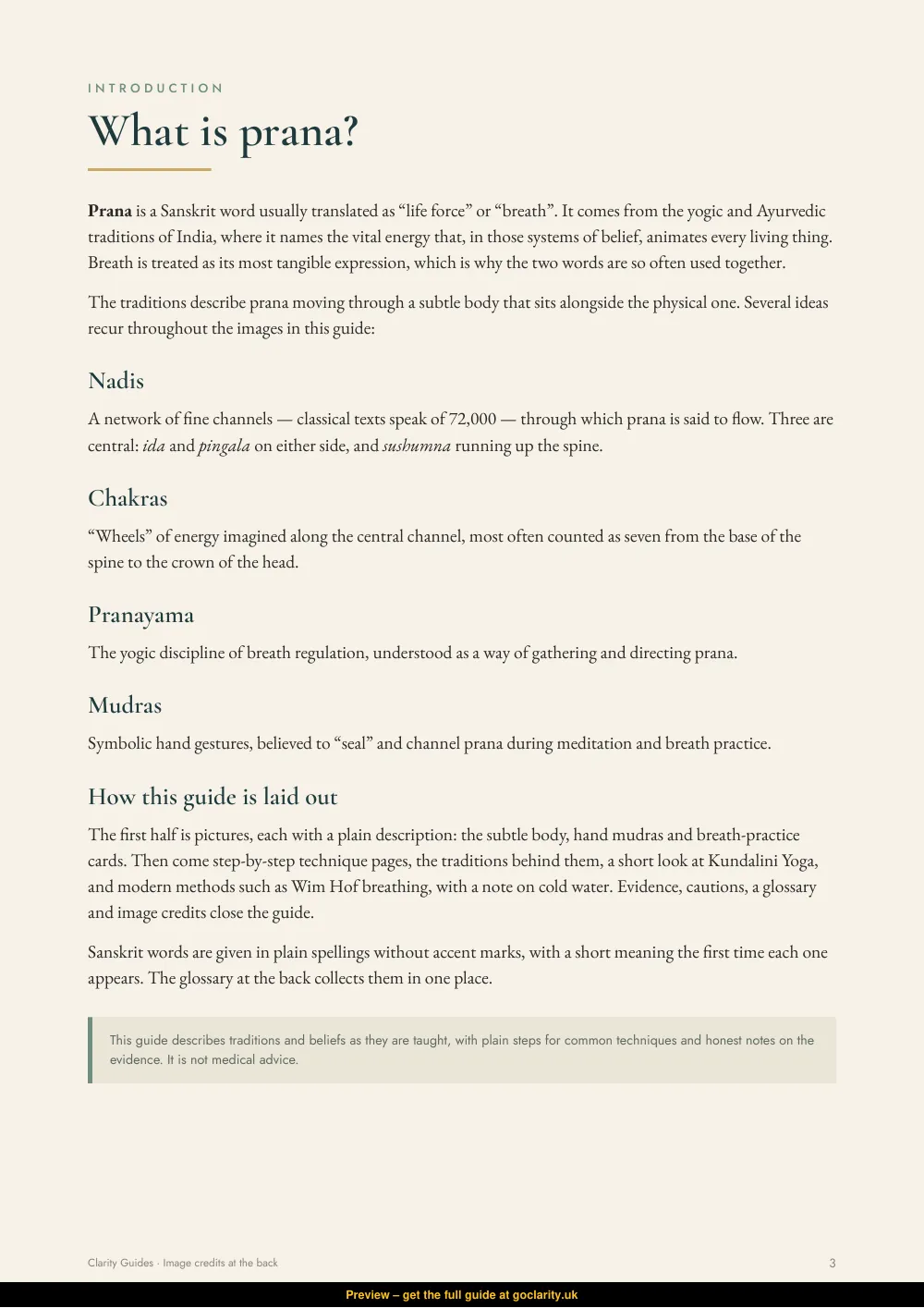
The full guide goes on sale soon.
About this guide
Prana & Breathwork: A Visual Guide is an illustrated introduction to two ideas from the yogic and Ayurvedic traditions of India: prana, usually translated as “life force” or “breath”, and the breath practices that are said to gather and direct it.
More about this guide
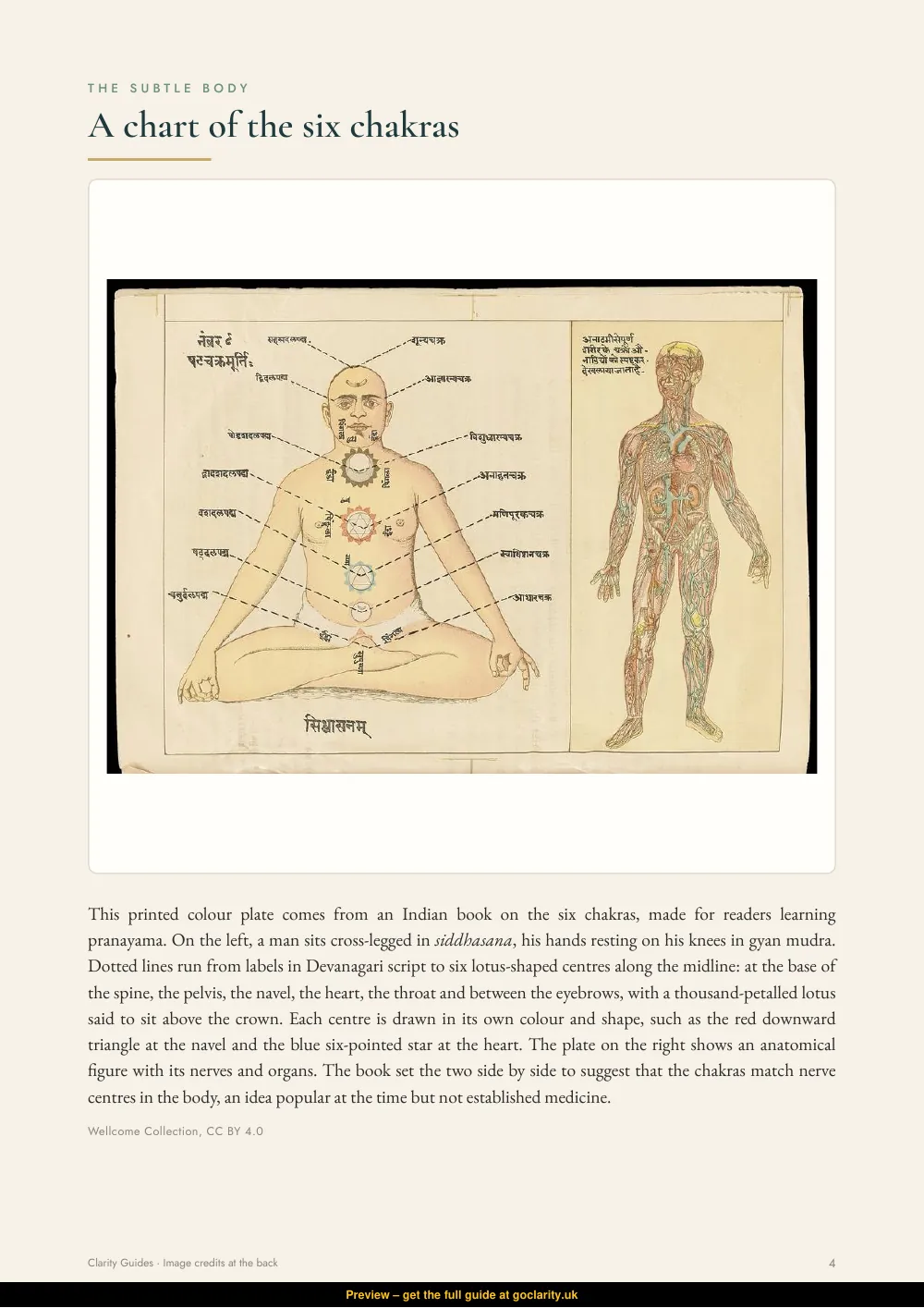
The guide is built around a series of images, each with a plain description of what it shows and where it comes from. It opens with the subtle body as the traditions describe it: the nadis, or channels, the three central channels ida, pingala and sushumna, and the chakras, illustrated with a historic Indian chart of the six chakras and a manuscript painting. Hand mudras follow, then breathwork: a techniques chart, four counted breathing exercises, preparing for meditation, Fire Breath and other “power” techniques, and Kundalini, the coiled serpent, with a closer look at what the word means and the journey through the chakras.
Where an old chart links the chakras to nerve centres in the body, the guide notes that this was a popular idea at the time but is not established medicine. It ends with a glossary of Sanskrit terms and full image credits.
The guide describes traditions and beliefs as they are taught. It makes no health or medical claims and nothing in it is advice or instruction.
What’s inside
- What is prana?
- The subtle body: nadis and chakras
- A historic chart of the six chakras
- Hand mudras
- What is breathwork?
- Four counted breathing exercises
- Preparing for meditation
- Kundalini and the journey through the chakras
- A gentle beginner sequence
- Box, 4-7-8, coherent and alternate-nostril breathing
- The roots of pranayama, the five vayus and the bandhas
- Kundalini in the old texts, and inside a class
- Wim Hof, cold water and staying safe
- Breath and the nervous system, explained
- Nasal breathing, Buteyko and everyday moments
- A 7-day starter plan
- Evidence, limits and when to stop
- Glossary and image credits
For general interest only. This guide describes traditions and beliefs and makes no health claims. Not medical advice.
Spotted an error? Let us know
Thanks for helping keep Clarity accurate. Tell us what’s wrong and we’ll check it.
Thank you! We’ve got your report and we’ll check it. Every fix makes the guides better for everyone.