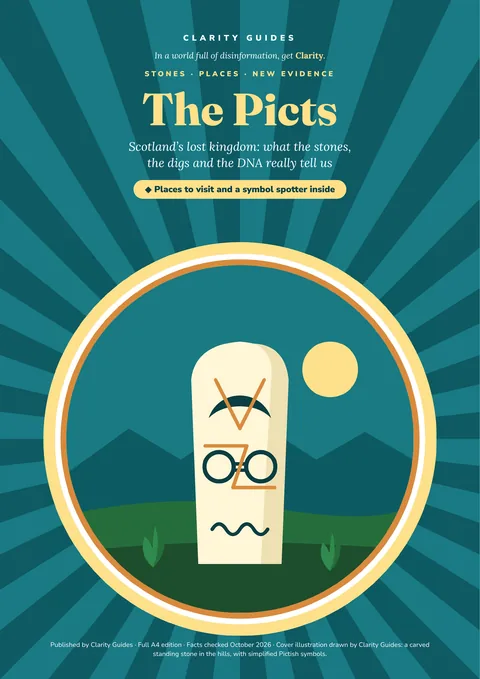
Witches of ScotlandThe Trials, the Myths and the Fife Story
What really happened in Scotland’s witch trials, who was accused, and how the modern apology and pardon campaigns fit the history.
40 pages A4 · phone edition 72 pages
On sale soon £3.99 · coming soon
Read a previewRead a preview
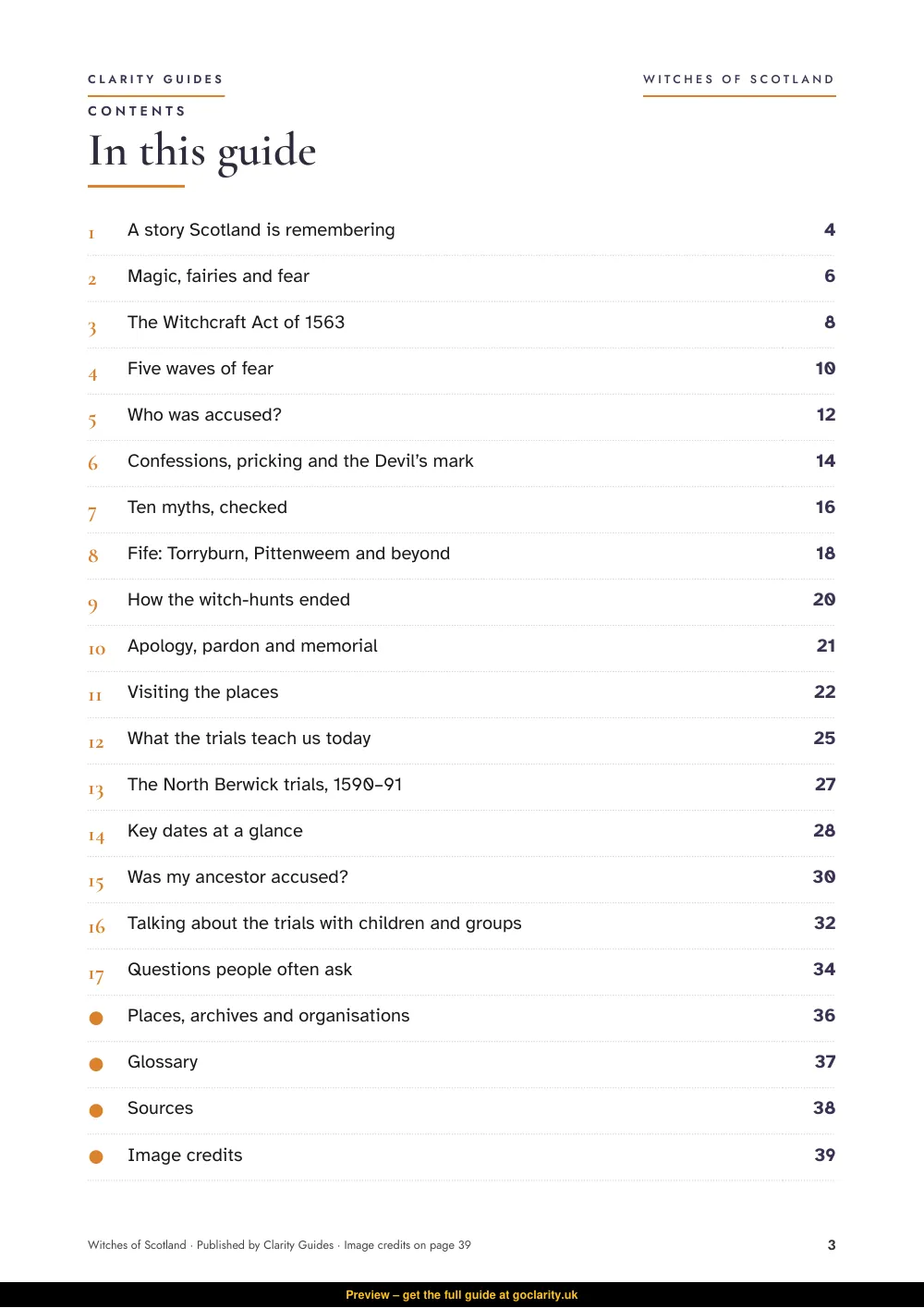
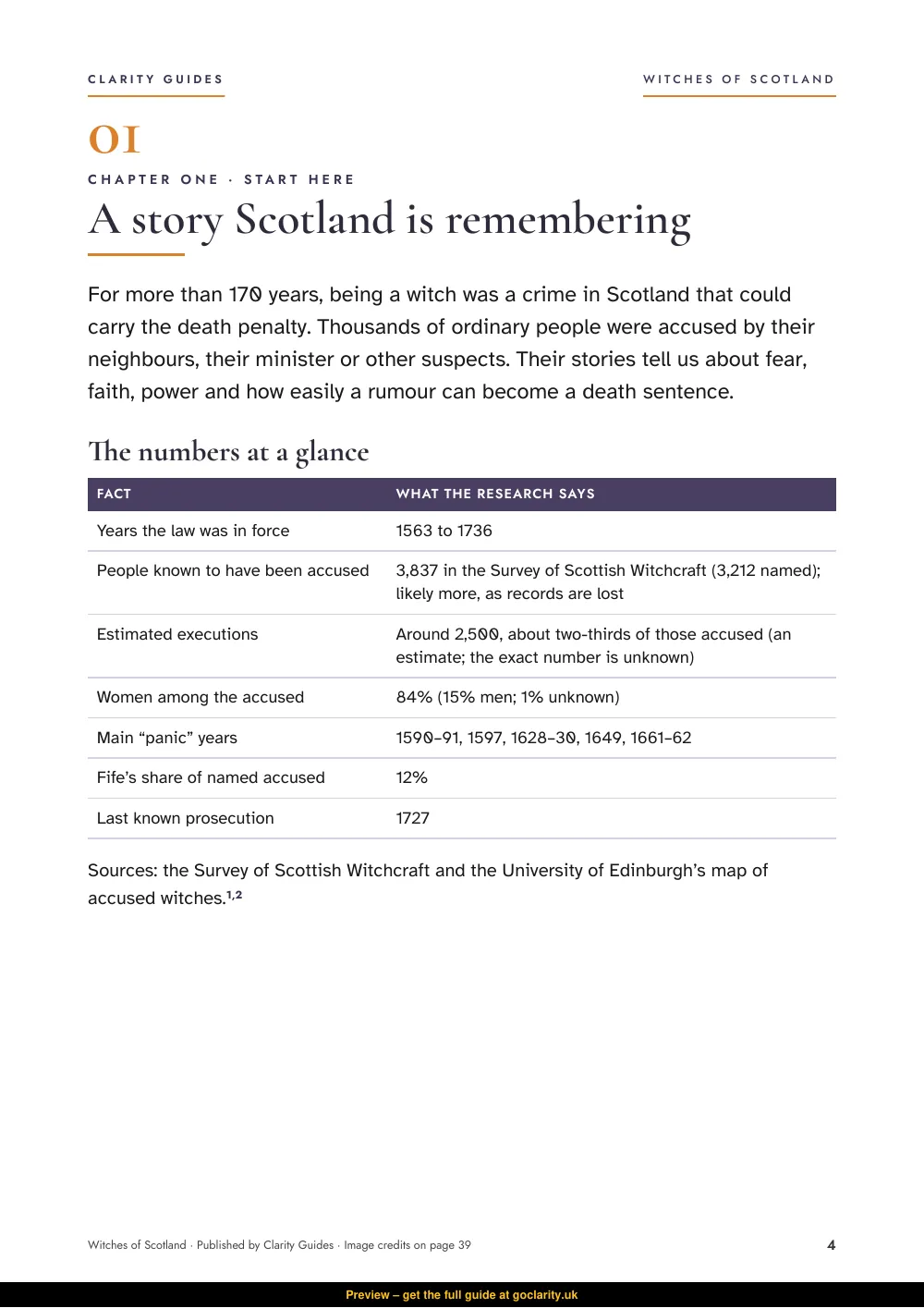
Read the first four pages right here (of 40). Swipe to turn, tap a page to see it bigger.


The full guide goes on sale soon.
About this guide
Between 1563 and 1736 Scotland accused thousands of people — mostly women — of witchcraft. Many were tortured and executed. This guide tells what really happened, why it happened, and how the modern apology and pardon campaigns fit the history.
More about this guide
It starts with the world of magic, fairies and fear behind the Witchcraft Act of 1563, then follows the five waves of fear, who was accused, and how confessions were forced, from pricking to the search for the Devil’s mark. Ten popular myths are checked against the records.
There is a chapter on Fife, from Torryburn to Pittenweem, plus the North Berwick trials of 1590–91, how the witch-hunts ended, and today’s apology, pardon and memorial. Practical sections help you visit the places, find out whether an ancestor was accused, and talk about the trials with children and groups.
What’s inside
- A story Scotland is remembering
- Magic, fairies and fear
- The Witchcraft Act of 1563
- Five waves of fear
- Who was accused?
- Confessions, pricking and the Devil’s mark
- Ten myths, checked
- Fife: Torryburn, Pittenweem and beyond
- How the witch-hunts ended
- Apology, pardon and memorial
- Visiting the places
- What the trials teach us today
- The North Berwick trials, 1590–91
- Key dates at a glance
- Was my ancestor accused?
- Talking about the trials with children and groups
- Questions people often ask
Popular history based on published research. Where historians disagree, we say so.
Spotted an error? Let us know
Thanks for helping keep Clarity accurate. Tell us what’s wrong and we’ll check it.
Thank you! We’ve got your report and we’ll check it. Every fix makes the guides better for everyone.